
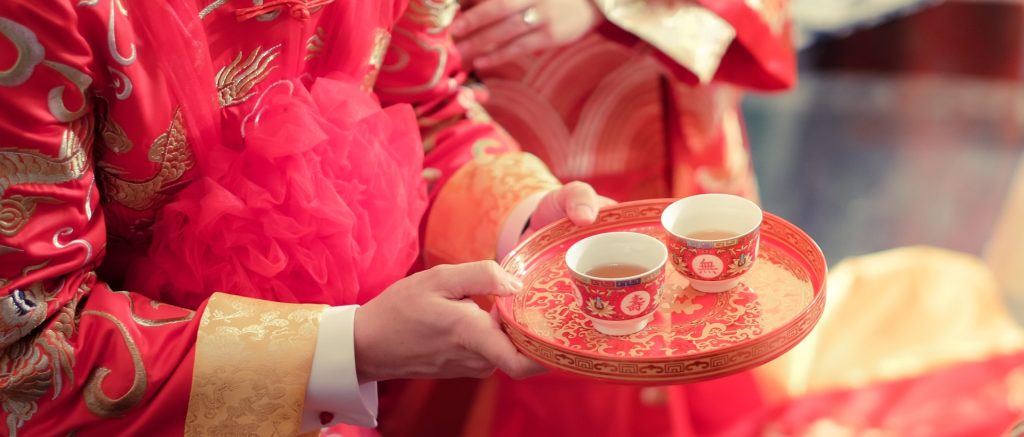
A traditional Chinese wedding day is made up of several customs, beginning with the gatecrash and ending at the banquet table. Of these, the tea ceremony is the one most closely tied to the family. It is the moment when the couple serve tea to their elders to show respect and thanks, and when the two families come together. It is also one part of the day that cannot be redone. Once the elders are seated, any gap in the plan, such as a wrong serving order, a missing cup or a schedule that is too tight, has to be handled in front of the whole family. This Chinese Tea Ceremony Guide Singapore couples can use covers seven mistakes that create these gaps and the simple steps that prevent each one.
Most of the mentioned confusions can be solved with some weeks of preparation. In case you have got fifteen relatives coming over, allocate one hour to an hour and a half, because the ceremony lasts for that long. Each family has its own traditions, starting from who is served first, how the elders are addressed, and what goes into the brew. For a Hokkien family the traditions may be different from the ones a Teochew, Cantonese or Hakka family is having, and it is always better to consult with parents of both sides in advance.
Each section of this Chinese Tea Ceremony Guide Singapore, couples can follow explains one mistake and what to do about it. At the end of the guide you will find a checklist of items to prepare and a timeline that begins about a month before the wedding.
What Should a Chinese Tea Ceremony Guide Singapore Couples Include?
Elders are served one at a time. Some families expect the couple to kneel, some accept a bow, and some prefer that you stay on your feet. Find out which before the day. The elder takes a sip, says a few good wishes and passes you an ang bao (red packet). Some give gold jewellery as well. In many families, it is the groom’s mother who fastens a gold bangle or chain on the bride during the ceremony. With relatives younger than you it goes the other direction. Each of them brings you tea, and you hand over an ang bao in return.
Sweetness is the point: the tea is meant to wish the couple a sweet life together. The cup normally holds red dates and dried longans. Some families also add lotus seeds, which carry the wish for children. Families are particular about these, so check with yours.
Not every couple understands how different the practices can be. Hokkien, Teochew, Cantonese or Hakka families always have their way of practicing this custom, and even in one family different members may have different memories of it. Some families insist on every traditional step, while others are happy with a short and simple ceremony. In case of two families with Christians in them or with parents from different backgrounds, the short version is most commonly practiced.
So the first conversation you have should be with your parents. A Chinese Tea Ceremony Guide Singapore couples read online can only tell you what is common. Your parents know what your family does, and they ought to hear your plans before you book or buy anything.
7 Common Chinese Tea Ceremony Mistakes to Avoid
Most of these are small, and most happen because a question wasn’t asked early enough. A few weeks of planning usually covers it. These are the seven we run into most often on Singapore wedding mornings:
- Not confirming the Chinese tea ceremony order early
- Overlooking Chinese tea ceremony etiquette and family titles
- Choosing the tea set and ingredients without asking your family
- Underestimating the time needed for the ceremony
- Not giving each helper a clear role on the day
- Forgetting essential items
- Letting photography interrupt the family moment
Mistake 1: Not Confirming the Chinese Tea Ceremony Order Early
Of the seven, this one causes the most stress on the day. Couples often assume the order is obvious, and a lot of the time it isn’t. Most families go by generation and then age, so grandparents come first, then parents, then uncles and aunties, then older siblings and cousins. Some families start with the parents, though. Others take one whole side of the family first, whether that is the father’s or the mother’s, before turning to the other. And the bride’s home might follow a different order from the groom’s.
More complicated cases require more attention. In the case of a divorce or remarried parents, speak to each parent separately and find out what role they would like to take. In the case of a death that occurred recently, you should also consult the oldest person in the family before reaching a conclusion, since some families proceed grudgingly, while others take their time. If, in a family, a grandparent is absent as he/she is ill or abroad, it is necessary to make a special appointment with them so that they can participate in the arrangement.
How to avoid it:
- About a month ahead, phone both sets of parents and ask them to tell you the order in which the elders should be served.
- Put it all in writing, with each person’s name and their relationship to you. A note on your phone is fine.
- Then show it to your oldest relative, who will probably spot the cousin you left off.
- If tea is happening at two homes, make a list for each, because the order may not match.
- Print two copies, one for whoever is running the ceremony and one for a relative who knows everyone’s face.
Mistake 2: Overlooking Chinese Tea Ceremony Etiquette and Family Titles
Serving tea seems easy until you’re standing in front of your father’s elder brother and your mind goes blank on what to call him. The routine itself takes seconds to learn: cup in both hands, title said clearly, then you wait for the blessing and only after that step to the next person. Kneeling differs a lot between families. Some expect it, some prefer a bow, and a few grandparents would rather you stood, especially if you’re wearing a heavy qun kua or a tight suit.
The titles are harder. Many couples now speak English at home, while Chinese has separate titles for your father’s elder brother, his sister and your mother’s brother, and those shift again by dialect. A wrong title won’t wreck the ceremony. The elders will hear it though, and a short practice session spares everyone the awkwardness.
How to avoid it:
- Instead of making assumptions about what each relative’s name should be, use the proper terminology as it can depend on the local dialect.
- Write each name and its pronunciation down, and repeat it in the weeks to follow.
- It’s important to consult the two sides of the family about kneeling or standing throughout the ceremony.
- Make sure to reserve a chair for those with mobility problems.
Mistake 3: Choosing the Tea Set and Ingredients Without Asking Your Family
Red and gold tea sets are pretty and it’s tempting to buy one online straight away. But your mum or grandmother might already have the set the family uses, and she may have strong views about the tea too. Most families go with sweet tea, red dates and dried longans. Some add lotus seeds, and a few have rules on how many go in each cup. It costs nothing to ask, and buying a second set does cost money.
Health considerations become vital, especially if your relatives are seniors with special dietary requirements. Find out from them or their family what they are permitted to drink; don’t presume that they would have sweetened tea or a full cup. It’s also important to do a bit of groundwork beforehand: serve the tea warm, use a tray that is easy to carry, and check the cups for any damage. A Chinese Tea Ceremony Guide Singapore couples use should include these practical checks alongside the ceremony’s customs.
How to avoid it:
- Check with your parents or grandparents about the tea, ingredients and tea set they prefer.
- Inspect the cups a few days before the wedding and pack a few spares.
- Bring a flask of hot water for refills.
- Decide who will carry the tray and pour the tea.
- Ask elders with dietary or health needs whether they would prefer tea without sugar.
- If the second ceremony is at another home, check what is available there, including a tray, cups and kettle.
Mistake 4: Underestimating the Time Needed for the Ceremony
The easiest way to plan the time is to count how many relatives you will serve. Allow about five minutes for each one, which covers the tea, the blessing, the ang bao and the photo. Twelve relatives take roughly an hour, and eighteen take closer to an hour and a half. That is why a medium-sized family usually needs 60 to 90 minutes, and a bigger family needs more. The younger relatives then take their turn to serve you, and that adds a little more time on top.
How to avoid it:
- Count your relatives and allow about five minutes for each one before you choose a start time.
- Add the travel time between homes, including parking and the lift, and leave a proper gap before the next event.
- Check any auspicious times with your family first, then plan the rest of the morning around them.
- Let the elders take their time. Many of them have waited a long while for this moment.
A good Chinese Tea Ceremony Guide Singapore couples trust will always say the same thing: plan for more time than you think you need.
Mistake 5: Not Giving Each Helper a Clear Role on the Day
Somebody has to bring the tea set, top up the cups, hand out the ang bao and call each relative forward. If nobody has been asked, the couple end up doing it themselves, and then they are managing a tray instead of looking at their grandmother. Space matters too. A living room in a 4-room HDB flat fills up quickly with few relatives, photographers and a couple in wedding clothes.
How to avoid it:
- Give each helper one job, and only one.
- Put one person on the tray and the refills, and another on guiding relatives into place.
- Ask a third person to stand beside you with the name list and quietly help with titles.
- Keep the ang bao sorted by person, with one helper holding them, so that you hand over the right one each time.
- Plan the seating before the day, with the older relatives seated first, and tell your helpers a few days ahead and again the night before.
Mistake 6: Forgetting Essential Items (Use a Chinese Wedding Tea Ceremony Checklist)
Checklists are dull, but they’re the fastest way to avoid a hunt for a missing tray in the morning. A Chinese wedding tea ceremony checklist also makes it simple to give jobs to other people.
What to prepare:
- Tea set, serving tray and spare cups
- Tea ingredients, and hot water in a flask
- Ang bao for the younger relatives, sorted by person
- Any gold jewellery or gifts to give or receive, in a labelled pouch
- The list of relatives and the serving order
- Family titles and pronunciation notes
- Cushions for kneeling, and chairs for the elders
- Tissues, wet wipes and a small towel for spills
- A copy of the schedule and the main phone numbers
- One labelled bag or box to put everything in
How to avoid forgetting anything:
- Put someone’s name next to each item so you know who’s bringing it.
- Go through the whole list the night before.
- If you’re using two homes, do a second list for the second one.
- Keep it to one page.
A Chinese Tea Ceremony Guide Singapore couples prepare shouldn’t turn into another thing to stress about.
Mistake 7: Letting Photography Interrupt the Family Moment
The tea ceremony produces some of the most spectacular wedding photographs, including the moment a grandmother gives her blessing, when the bride’s bangle is put on, and the father being there to witness it all. Yet, it is easy to miss important moments. Every once in a while, the relative has to stand up, move around, and then sit down again. Provide your photographer with a small list of important events like the elder brewing the tea, the blessing, and the exchange of ang bao or jewelry.
How to avoid it:
- Brief your photographer and videographer one or two weeks ahead.
- Share the serving order and identify key family members.
- Ask them to photograph from the side without interrupting the ceremony.
- Take family photos afterwards, with seats ready for older relatives.
The purpose of any Chinese Tea Ceremony Guide Singapore couples follow is that your family can enjoy the ceremony. The photographs come second.
How to Prepare For Chinese Tea Ceremony: A Simple Timeline
Here’s a rough timeline, based on this Chinese Tea Ceremony Guide Singapore couples can follow, to spread things out.
- Three to four weeks before. Talk to both families and find out who’s coming. Agree the serving order, and ask about titles, tea ingredients and any customs your family follows.
- One to two weeks before. Buy or borrow the tea set and ingredients. Sort the ang bao so each is ready for the right person. Settle the seating and schedule, and tell your helpers and photographer the plan.
- The night before. Go through the checklist. Confirm what time everyone’s arriving, and put everything in one labelled bag or box.
- On the day. Pass things over to your helpers. They’re there to keep the ceremony running so you can spend the time with your family.
Something will probably still change in the morning. If you’ve done the steps above, though, there’ll be fewer decisions to make while everyone’s waiting.
Plan Your Chinese Wedding in Singapore With 8 Asthas
A Chinese wedding is a day full of significance with events like the gate crashing, tea ceremony, change of attire, family photographs and the wedding dinner. Each of these events has a fixed time and specific expectations. This Chinese Tea Ceremony Guide Singapore couples can rely on covering one part of the day, and getting all of it to fit together smoothly is easier with experienced planning.
8 Asthas is a wedding planner in Singapore with experience in planning and coordinating Chinese weddings from beginning to end. Our team works closely with you and your families on the timeline, vendors, transport and family arrangements, so every tradition is honoured and you can enjoy your day.
If you’re planning a Chinese wedding in Singapore, we’d be glad to talk. Please contact 8 Asthas to arrange a consultation.

