
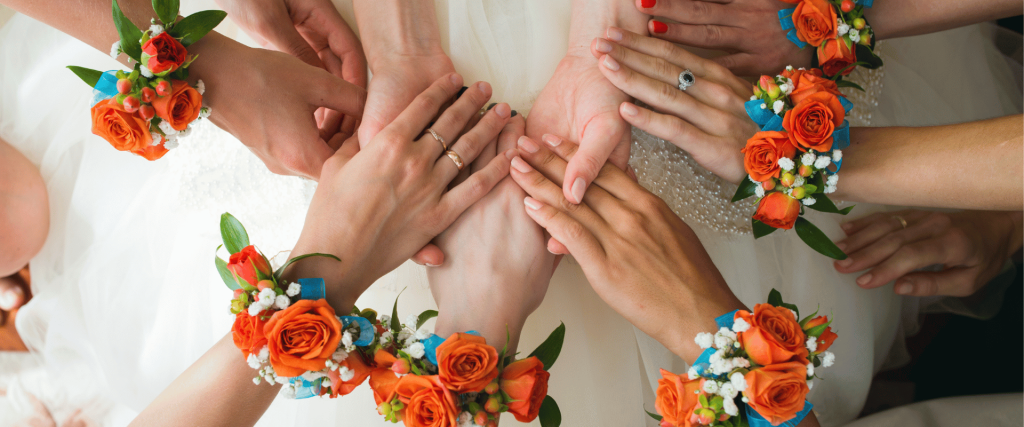
Being chosen as a bridesmaid at an Indian wedding in Singapore says something most people do not say out loud. It means you are one of the close ones. Most people assume they already know what the role involves, especially if Western weddings are the only ones they have stood in before. Turn up, look good, be there for the bride, that much feels familiar enough.
What nobody tells you is how much more this role actually asks of you at an Indian wedding in Singapore. The first function arrives and suddenly there are days of celebrations stretched ahead, ceremonies most of the bridal party has never even seen before, and a friend somewhere in the middle of it all, counting on the people she picked to genuinely show up for her.
The Sangeet (pre-wedding music night) alone can require weeks of preparation that nobody warns about at the start. The temple ceremony moves through rituals that most people in the bridal party have never witnessed before. And in every ceremony, there is a bride who has chosen the people standing beside her carefully, trusting them to be genuinely present through all of it.
What this guide covers is the full picture for anyone stepping into the role of bridesmaid at an Indian wedding in Singapore, from what to wear at each ceremony and what the temple customs expect, to what the Sangeet performance actually demands and what the bride needs from the people beside her when the cameras are not pointing in her direction.
Being a Bridesmaid at an Indian Wedding in Singapore Spans Several Days
Setting aside a single afternoon will not come close to covering it. Two to four days is the realistic expectation, sometimes more, and the bridal party is present across all of it from the first pre-wedding function to the night the reception ends.
Mehendi Night (Henna Ceremony)
The Mehendi night usually opens the celebrations. The henna artist works across the bride’s hands and feet while the women she is closest to gather around her. That evening feels quieter and more personal than anything else in the days that follow. With fewer people around, the evening tends to pull the bride and her closest friends even closer together.
Haldi or Pithi Ceremony (Turmeric Ceremony)
The Haldi falls the morning before the wedding. Turmeric is applied to the bride in a ritual that is as much about the energy of the people gathered as it is about the blessing itself. For first timers, the energy of it tends to be surprising. It is loud, joyful, and intentionally messy, and the photographs from it almost always become the ones the bride treasures most.
Sangeet Night (Pre-Wedding Performance Night)
The Sangeet brings both families together for music, performances, and dancing. The bridal party performance is what the room has been anticipating all evening. What the audience sees on the night gives no hint of how chaotic the rehearsals actually were. Practice nights get moved, entire sections get reworked, and someone is always playing catch up right until the final rehearsal. The final week carries its own particular tension. None of that is visible once the music begins and the bride sees her closest people on the floor for her.
A few things that separate a performance the room remembers from one that nearly did not come together:
- Starting rehearsals earlier than feels necessary. Two weeks always feels like enough until the first session reveals otherwise
- Choosing songs the bride genuinely loves rather than songs that are easier to choreograph
- Wearing shoes that are properly broken in before the performance night
- Having one person take ownership of coordination. A group performance without a point person fractures in the final week
Wedding Ceremony
The wedding ceremony itself holds the deepest significance of everything across the celebration. It moves at the pace the rituals require, not the pace printed on the schedule. Planning around a precise end time is not realistic.
Reception Dinner
The reception dinner is where everything the week has built toward finally comes together in one room. The bridal party reaches the reception having already carried the weight of several days of celebration, with very little rest between them.
Dressing for Each Ceremony Without Getting It Wrong
A different outfit is expected for each ceremony. The group chat will cover this at length. What it often does not cover is the practical reality behind each choice.
Yellow, mustard, and orange are the colours the Haldi morning calls for, and the reason runs deeper than tradition. Whatever shade is worn will almost certainly carry the evidence of the morning by the time it ends, because turmeric finds its way onto everything within reach, no matter how careful anyone tries to be. The colour choice is a practical decision as much as a cultural one.
Draping a saree for a full day of ceremonies, dancing, and moving between venues in Singapore’s heat is a different task from wearing one for two hours. A drape done carelessly in the morning becomes a logistical problem by the evening. Getting proper help with it before the day saves real trouble.
For non-Indian bridesmaids unsure about outfits:
- A direct conversation with the bride about what she would love to see saves weeks of uncertainty
- Brides at Indian weddings in Singapore almost always appreciate when their closest friends make the effort to dress for the occasion rather than around it
- Jewellery matters more than expected. An outfit without it at an Indian wedding looks noticeably incomplete
- Sort jewellery before the week of the wedding. Last minute borrowing rarely works as smoothly as it sounds
What to Expect Inside a Singapore Hindu Temple on the Wedding Day
Indian wedding ceremonies in Singapore are frequently held at Hindu temples or temple wedding halls. Arriving without knowing what to expect makes the experience more disorienting than it needs to be.
Before entering:
- Footwear comes off at the entrance to the main prayer hall
- Modest dress is expected and shoulders should be covered
- Traditional Indian attire such as sarees and lehengas fit the environment without needing any modification
- A light scarf or shawl handles the shoulder coverage requirement for anyone not in Indian dress
Fire rituals, the exchange of garlands, and prayers that formally bind the couple together make up the core of the ceremony. The sequence carries deep cultural significance and follows its own pace. Most ceremonies span somewhere between two and three hours, though the rituals set their own clock and the morning concludes when they are complete, not when the schedule anticipated.
During the ceremony:
- Stay close to the bride, attentive and present without pulling focus from the rituals
- Be mindful of where the photographers are positioned
- Sitting on the floor near the mandap (wedding altar) for extended periods is part of this. Wearing comfortable innerwear and footwear under the outfit matters more than people expect
- Singapore’s heat does not disappear in covered spaces. Staying hydrated through a morning temple ceremony is genuinely important
What the Bride Actually Needs From Her Bridesmaids in Singapore
Every other section covers practical preparation. This section covers what actually matters.
The emotional demands on a bridesmaid at an Indian wedding in Singapore shift considerably from one ceremony to the next. The Sangeet asks for energy and performance. The morning before the ceremony asks for something completely different.
Something about the morning before the temple ceremony catches people off guard. The family fills the space, preparations move forward, and the full weight of what this day means tends to settle in quietly, without warning. A bridesmaid who stays calm and steady during that time, without adding to the emotion already in the room, tends to be the one the bride remembers most clearly.
What experienced bridesmaids still do not see coming:
- The Vidaai (farewell ceremony) is the moment at the end of the wedding when the bride says goodbye to her family. No amount of knowing it is coming quite prepares anyone for the room when it happens. The people beside her need to hold steady through it, even as they feel the weight of the moment too
- The transitions across a long wedding day. Tracking whether the bride has eaten, whether she has had five minutes to herself, where the touch up kit is. These things do not photograph but they matter enormously
- The quiet moments between the visible ones. A word before the ceremony begins. A hand held through a difficult family dynamic. These are the memories that last long after the official photographs have been seen a hundred times
The Reception Dinner: The Final Night of an Indian Wedding in Singapore
Indian weddings in Singapore do not end cleanly. The reception dinner, whether it happens the same evening or the following night, is the final chapter and the bridal party is present for all of it.
By the reception, everyone is running on a mix of emotion and exhaustion. The bride is often exhausted by this point, but somehow still glowing and full of energy on the outside. The bridesmaid’s role at this point is to carry the energy of the evening genuinely, not performatively, because the bride needs the room to feel joyful without having to create all of that herself.
The reception is also where the most formal version of the bridesmaid’s look comes together. This is what ends up in the wedding album alongside the bride’s own photographs, and it is the image that gets looked at for years.
A Note for Non-Indian Bridesmaids Standing at a Singapore Indian Wedding
Being asked to stand at an Indian wedding as someone from outside the community is a specific kind of trust worth acknowledging before the practical planning begins.
- Not every ritual will make immediate sense as it unfolds. Questions asked with genuine curiosity are almost always welcomed
- Not knowing everything is not the same as not being present, and presence is what the role actually asks for
- Indian wedding families in Singapore are genuinely warm toward people who show up with real interest and respect for the traditions
- Wearing traditional Indian attire, committing to the Sangeet performance fully, and being emotionally available throughout matters far more than knowing every ritual perfectly
Final Takeaway
Getting every detail right is not really what the role asks for. What it asks for is showing up fully, at every ceremony, in every quiet moment, even the ones that never make it into the wedding album. The outfit matters. The Sangeet performance matters. But years from now, what the bride will remember is who showed up for her as a bridesmaid at an Indian wedding in Singapore, not how polished the showing up looked.
Planning an Indian wedding in Singapore and looking for support that understands every part of what that involves from Sangeet nights to temple ceremonies to reception dinners is exactly what 8 Asthas is built for. Every celebration is approached with a full understanding of what each ceremony means to the people at the centre of it. If that kind of support is what the wedding needs, that conversation is always welcome.

