
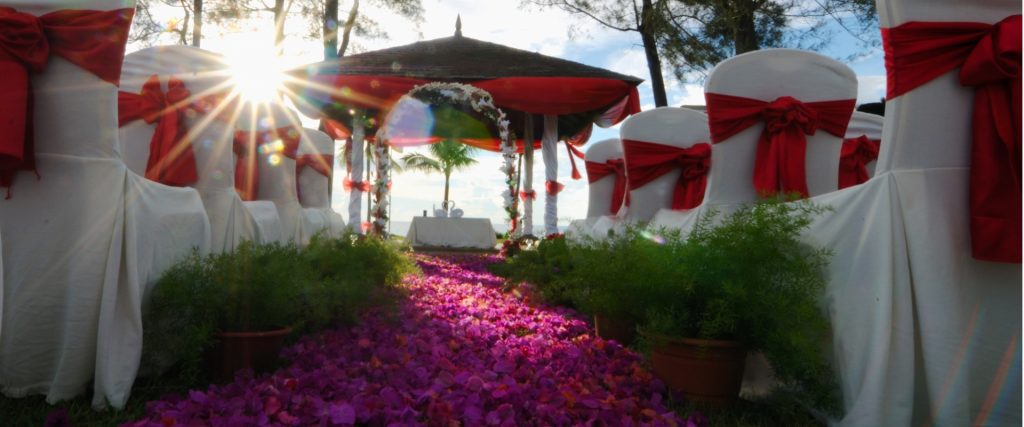
A mandap isn’t just decoration. It’s basically the whole ceremony happening in one spot, families crowded around it, rituals playing out, and yes, most of the photos you end up framing afterward come from right there. Planning an Indian wedding in Singapore? Then Wedding Mandap Setup Guidelines for Singapore Venues are worth sitting down with, because there’s design, sure, but also ceremony logistics, space limits, guest comfort, photography angles, and a bunch of small stuff people forget when they’re only looking at how pretty it’ll be.
It’s easy to fall for a design online before you’ve even seen the room it’s going into. Then you actually walk the venue, and half of what looked perfect on screen just doesn’t work here. A mandap has to fit inside the bigger wedding theme, which drags in a lot more than most couples expect, ceiling height, pillars, whatever lighting’s already built into the room, how much floor space you’re actually working with, restrictions the venue won’t budge on, and whether the whole structure can even get through the door.
Which is really why the room should come first and the design should follow. Nobody’s trying to copy someone else’s photo exactly. The point is a mandap that fits your venue, your ceremony, and the people standing around it on the day. That’s what Wedding Mandap Setup Guidelines for Singapore Venues actually come down to, something that looks the part, runs smoothly through every ritual, and still feels like the day itself long after it’s over.
What Should You Check Before Choosing a Mandap Design?
Don’t fall for a design before you’ve walked the actual venue. Ballrooms, temple halls, function rooms, country clubs, outdoor gardens, honestly they all behave differently, and what works in one won’t necessarily work in another.
A few things worth checking:
- Floor space: enough room for the ceremony, or is it going to eat into seating, entrances, the photographer’s working area?
- Ceiling height: basically decides whether tall pillars or layered hanging florals are even an option.
- Access: service lifts, loading bays, corridors, and which entrance the large structures will actually come through.
- What’s already there: pillars, chandeliers, screens, stages, anything that might affect where the setup can sit.
- Venue rules: what’s allowed when it comes to fixing, hanging, drilling, or electrical work.
None of this kills the creativity. If anything it gives the decorator something solid to actually work with instead of guessing. Most experienced planners swear by this step, mainly because it’s what saves you from a redesign scramble two weeks before the big day.
How Does the Wedding Ceremony Influence Mandap Design?
A mandap isn’t just a backdrop for photos. The actual ceremony happens there, couples, priests, parents, other family members, all moving through different rituals at different points.
A few things to think through here:
- Who’s actually going to be under or around the structure: this affects how wide and deep it needs to be.
- How the ceremony flows: some rituals need the couple or family to shift positions partway through.
- Where the priest will be working: they need a clear, practical space, not something squeezed into a corner.
- Where the ritual items go: accessible, but not sitting in the middle of every photo.
- How the couple enters and exits: that path needs to stay clear and comfortable.
Plan around how the ceremony actually moves, and the structure won’t feel cramped once things get underway. That’s exactly why good Wedding Mandap Setup Guidelines for Singapore Venues put ceremony flow ahead of pure aesthetics.
What Size Mandap Actually Fits Your Venue?
There’s no such thing as a “standard” size here, whatever a vendor’s catalogue tells you. Every venue in Singapore is built differently, and honestly proportion wins out over scale almost every time.
A rough sense of what tends to work:
- Big ballrooms can take bold structures, layered flowers, heavy draping, statement lighting.
- Smaller function rooms tend to look better left lighter, nothing that eats up the room the second guests walk in.
- High ceilings give you room to go tall with the florals or stack the draping.
- Low ceilings usually work better if you go wide instead and skip the height altogether.
Get the proportions right and the whole room just feels finished, not like someone wheeled the mandap in as an afterthought. That’s genuinely the point of good Wedding Mandap Setup Guidelines for Singapore Venues, size matters less than whether the balance actually works.
Which Flowers and Materials Suit Singapore Venues?
Once the structure’s settled, this is where the fun styling decisions come in.
Couples usually land on one of two broad directions:
- Traditional: wooden mandaps, rich fabrics, brass details, jasmine, roses, the classic Indian wedding palette.
- Contemporary: softer tones, greenery, structured panels, sometimes a blend of the two.
Singapore’s climate has more say in this than most couples realise, fresh flowers especially. A few things worth keeping in mind:
- Heat and humidity will bloom faster than you’d think possible.
- How flowers are transported and handled on the way matters too, that’s often the difference between blooms that still look alive by the ceremony and ones that don’t.
- Timing isn’t something to guess at. Fresh flowers go in as late as the schedule allows, right before things start, so they’re not sitting there wilting for hours beforehand.
Also worth keeping in mind: guests see the setup from the entrance and their seats, while photographers and videographers are working every angle imaginable. Wedding Mandap Setup Guidelines for Singapore Venues really do come down to picking flowers that suit both the space and the weather.
Why Is Lighting Critical for Wedding Mandap Photography?
Lighting changes how a mandap looks more than most couples realise going in. Something warm and glowing during the afternoon setup can photograph completely differently once the venue’s evening lights come on, and by then it’s too late to fix.
A solid lighting plan covers a few things at once. Start with the couple’s faces, since that’s what everyone actually looks at first, and the light needs to flatter without washing anyone out. The flowers and decor need enough visibility too, or all that work disappears into shadow the second the sun goes down. Then there’s whatever the venue already has, chandeliers, fixed fittings, house lighting, none of which disappears just because you didn’t plan for it, so it’s worth walking through what’s already there before adding anything new.
Cameras see light differently than the human eye does, so what looks fine standing there in person can photograph badly, worth checking both. And the mood shouldn’t get lost either, decorative lighting is there to set a tone, not become the main event itself.
Since the mandap tends to be the most photographed spot at the entire wedding, lighting is worth sorting early rather than fixing on the fly. Good Wedding Mandap Setup Guidelines for Singapore Venues treat lighting as part of the structure from day one, not something bolted on once the rest is already built.
What Venue Rules and Safety Requirements Apply?
A good chunk of what actually matters in Wedding Mandap Setup Guidelines for Singapore Venues has nothing to do with flowers or styling. And this is exactly the part couples tend to breeze past.
Venues typically have their own rules around:
- Temporary structures
- Ceiling attachments
- Electrical work
- Loading access
- Installation methods
- Dismantling procedures afterward
Fire safety sits on top of all that, and it isn’t optional:
- Escape routes have to stay clear the entire time.
- Sprinkler clearances come with set distances you simply can’t build into.
- Some stage structures may need sign-off from a Qualified Person before they’re allowed up at all.
Check the design against what the venue actually permits before locking anything in. Skip this step, and you risk last-minute changes, or worse, delays on the wedding day itself.
How Much Time Is Needed for Mandap Installation?
The finished setup might look effortless, but there’s a fair bit of work behind it that guests never actually see.
Ahead of the wedding, it’s worth knowing:
- When the team can get into the venue to start setting up.
- How materials will actually be delivered and brought into space.
- How long the main structure takes to assemble.
- How much extra time the styling itself needs, flowers, fabrics, lighting, all the final touches.
- Whether there’s time left for a last check before guests start arriving.
Morning ceremonies make this even more important. The decoration crew might be starting hours before sunrise, well before you’d ever think to show up yourself. Locking down that installation window early is a small thing that saves a surprising amount of stress down the line.
How Should You Plan for Wedding Photography?
Photography needs a spot at the table while the mandap’s still on the drawing board, not something scrambled together on the morning of. Ask any photographer who’s shot Indian weddings, and they’ll tell you the mandap eats up more of the day’s photo time than any other single spot, which is exactly why it deserves attention this early.
Sightlines matter more than most couples think about upfront. The camera needs a clean view of the main rituals without a pillar or a decor piece cutting through the frame. Family members shouldn’t disappear behind flowers either, and there should be a way to get a wide shot of the whole setup along with side angles that don’t have someone physically climbing into the ceremony space to get them. Even the small decorative touches, the fabric, the jewellery, the little details, need enough space around them that they actually register on camera instead of blurring into a crowded frame.
None of this happens by accident. Talk to the photographer and the decorator together, early on, and you end up with a setup that photographs well from angles neither of you would have thought to plan for separately.
What Makes Guests Comfortable During the Ceremony?
Most of the planning energy goes toward the mandap itself. The people sitting around watching it deserve some thought too, and that part gets lost easily once you’re deep in design decisions.
Before locking in the layout, think about:
- Visibility: can guests actually see the ceremony from where they’re seated?
- Movement: are the main walkways clear?
- Family space: enough room for relatives joining in on the rituals.
- The couple’s entrance: is that path clear and easy?
- Photography: can the team move around without bumping into guests?
Good Wedding Mandap Setup Guidelines for Singapore Venues think about the room as it will actually be used on the day, not just how it looks before anyone has walked in.
What Questions Should You Ask Your Decorator?
A good conversation with your decorator should go beyond flowers and colour palettes.
Worth asking before you sign off on the final design:
- Has the venue actually been assessed in person?
- Does the structure suit the room’s proportions, width, height, all of it?
- How much time is needed for installation, and does that fit the venue’s access window?
- What installation methods is the venue okay with?
- Is there enough space for the ceremony itself, for the couple, priest, family, and ritual items?
- How will it photograph, not just from the front, but from the side angles too?
- Are the flowers right for the setting, especially if they’re fresh and need to last several hours?
- Who’s coordinating with the venue on setup day?
These aren’t complicated questions, but they’re exactly the ones that separate a plan that just looks nice on paper from one that actually comes together well on the day.
What Details Do Couples Often Overlook?
Some of the most useful things to plan for are the ones that never show up in the final photos at all.
Easy to miss:
- The ceiling: lights, chandeliers, sprinklers, and other overhead features that affect what you can install and how high.
- Access routes: service lifts, loading areas, corridors before you even reach the ballroom.
- Everything around the setup: seating, family movement, photography space, and how guests enter the ceremony area.
These might seem minor while you’re picking colours and flowers, but they can make a real difference once installation day actually arrives.
What Should a Professional Decorator Provide?
A good decorator does more than make things look attractive. They understand:
- How the design actually gets built
- How it fits into the venue
- How it works alongside the ceremony
- What needs to happen before guests walk in
It helps to look at any design from a few different angles:
- The couple’s view: does it feel like them, their traditions, their style?
- The ceremony’s view: is there enough room for the rituals and everyone involved?
- The guest’s view: can people see and move around comfortably?
- The photographer’s view: are the key angles open?
- The venue’s view: can it actually be built within the rules and time given?
When all of these come together, the setup stops being just a backdrop and becomes something genuinely built for the wedding it’s part of, not something borrowed from someone else’s.
How Does 8 Asthas Approach Mandap Decoration?
At 8 Asthas, a professional wedding planner in Singapore, we start by understanding the wedding, not by picking a design off a shelf.
We look at:
- The venue
- What the ceremony needs
- The space available
- Family arrangements
- Photography needs
- Lighting
- Installation access
- The overall style the couple is going for
We want guests to feel the impact the moment they walk in, but honestly, holding up comfortably through the whole ceremony matters just as much.
- Traditional celebrations get a classic mandap, with meaningful florals, fabrics, and ceremonial touches.
- Contemporary weddings lean into cleaner lines, softer styling, or a more understated floral approach, while still keeping the cultural elements intact.
Either way, the same care goes into every mandap and wedding decoration we build, whether it’s for a wedding or another special event. Our Instagram (@8asthas) page has our latest work too, mandap and event decoration setups worth a look.
Final Thoughts
The beautiful mandap is down to three primary aspects – the venue, reverence for the ceremony, and most importantly, the minutiae. So while impressive flowers and an awe-inspiring structure are essential, they are not of utmost importance.
Besides being visual delights, mandaps must leave room for the ceremony to breathe, enable the attendees to partake comfortably, photograph well from various angles, and comply with the venue’s requirements.
If you are planning an Indian wedding in Singapore, you should first finalize the venue according to your preferences and get an expert’s opinion on selecting mandap ideas. Therefore, we at 8 Asthas are here to arrange a tour and consultation to help you design a mandap that is beautiful, functional, reverent, and well-planned for the day of the event.

