
One of the first questions at any banquet is who sits where. A wedding seating plan in Singapore answers that by putting each guest at a specific table. It sounds simple, but a lot of it is already fixed. The tables are round and seat ten, the hotel won’t change its floor plan for you, and the guest list has family, friends and colleagues of all ages and cultures in the one room.
So why care this much? Because guests can tell. Get it right and everyone’s comfortable, dinner moves along, and the elderly relatives and anyone with special needs are looked after. Get it wrong? You’re looking at cramped tables, empty seats that you paid for, and awkward pairings that make the whole room feel off.
Most couples want three things from this whole process. A chart that doesn’t need three separate rounds of family input. A layout that puts people roughly where they belong. Something solid enough to survive the final week without needing a complete rewrite. That’s exactly what this guide covers. The practical rules behind a wedding seating plan in Singapore that actually works. The mistakes that cause most of the last-minute panic. Plus a proper process, so you aren’t winging it.
What Should You Know Before You Start a Wedding Seating Plan in Singapore?
The basic layout isn’t hard. Most couples get it quickly. VIP table first. That’s you and both sets of parents, right by the stage. Everyone else gets arranged by how close they are to you: extended family next, then friends, then colleagues. Acquaintances go near the back. Most don’t mind.
The magic number is ten. Ten to a table. Hotels and Chinese restaurants in Singapore all work that way, so know it before you touch a spreadsheet. Some venues go rectangular for Western-style dinners. Some do both, if two cultures are in the mix. Whichever it is, ask the venue early. Real capacity, real floor plan. Not the brochure one. Eleven people at a table of ten gets squeezy fast, and dinner turns awkward. Leave chairs empty and, well, you’ve paid for them anyway.
What a spreadsheet won’t show you is that a seating plan isn’t really about names. It’s about the people behind them. Who finds walking difficult. Which language they’re actually relaxed in. Who knows whom, and who’ll be stuck with total strangers. And the family history. Nobody talks about it. The table still knows, usually before the soup arrives. Get that sorted and people talk without being pushed.
Step-by-Step Guide to Creating Your Seating Plan
Start early. Six to eight weeks before is about right. Replies are coming in by then, though not all of them. Don’t stop at names. Jot down each person’s age group, how they know you, whether they need step-free access, and what they can’t eat. Who they already know too.
Step 1: Map the Venue Layout
Get the actual floor plan from the venue. The brochure won’t do. Look for the entrances and exits, the restrooms, the stage, the dance floor, and the path the servers take. Spot any ramps or lifts as well. Mark them. Everything else sits on top of this, so don’t rush it.
Step 2: Place VIP and Family Tables First
Parents on both sides, grandparents and the immediate family sit closest to the stage. In a traditional Chinese banquet that’s usually one main VIP table for the couple and parents, with family tables flanking it. If the wedding is on the bigger side, two VIP tables can work better, one per family and the same distance from the couple. One crowded head table never works as well.
Step 3: Group Guests by Common Ground
Give people something to talk about. University friends together. Colleagues from the same office together. Cousins around the same age, neighbours from the same block. A table of strangers with nothing to share? That’s the one that’s silent by the second course.
Step 4: Consider Elderly Guest Comfort
Older guests go near the entrance. Away from the speakers, somewhere well lit. They should see the stage without squinting. Think about the servers too. No one wants a trolley bumping their chair all evening.
Step 5: Handle Special Requirements
Dietary restrictions go to the caterer, marked clearly on the chart. No exceptions here. Guests who struggle with mobility should be on the ground floor, or near a lift if there is one. Leave wheelchair space at their own family table instead of moving them off. Seat their caregiver next to them.
Step 6: Review and Refine
Before it’s final, show the draft to someone who knows the family politics. A relative or a good friend. They’ll notice what you won’t. Estranged cousins on the same table, for one. Or a single friend who’d be happier sitting next to a familiar face.
Common Mistakes to Avoid in Wedding Seating Plans
A handful of mistakes turn up in almost every Singapore wedding seating plan we see. Easy enough to dodge, as long as you know they’re coming.
- Starting before RSVPs are in: Tempting, but you’ll only end up redoing it. Hold off until most replies are in, roughly 80 per cent, and keep some seats spare. The late repliers always show up.
- Ignoring table capacity: Ten to a table is what most hotels and Chinese restaurants here are built around, so don’t plan for twelve and hope. Make it eleven and the elbows start colliding. Make it eight, and somebody’s paying for two chairs that stay empty all night.
- Splitting up couples: Treat a couple as a single guest on the chart. Pull them apart and one half spends three hours making small talk with strangers, unless they’ve told you they’d rather sit separately.
- Filling gaps at random: A table of eight with two spare seats isn’t an invitation to drop in whoever’s left over. Ask a close friend if they’d mind moving across. They usually don’t.
- Forgetting children count as seats: Kids who get the full adult meal get a full seat on your chart, no discount for being small. Baby chairs are a different story, and most venues don’t count them in the ten, but ask rather than assume or you’ll find out on the night.
- Working off an old floor plan: Hotels like to rearrange things between the day you book and the day you wed, and they don’t always say so. Ask for the latest plan about a week out and lay your chart over it. Got a planner? Let them walk the room and compare.
- Treating last-minute changes as impossible: They’ll come. A sick uncle, a delayed flight, someone’s cousin turning up with a plus-one nobody warned you about. Lock most of the chart (about 95 per cent) a week before, then stick to small swaps. Keep a couple of seats loose and tell your coordinator whatever changes.
Displaying and Communicating Your Seating Plan
Once your wedding seating plan in Singapore is final, guests still need to find their tables. If they can’t, the entrance clogs up fast. A big chart near the door that’s easy to read sorts out most of it, with names in alphabetical order and the table number beside each one.
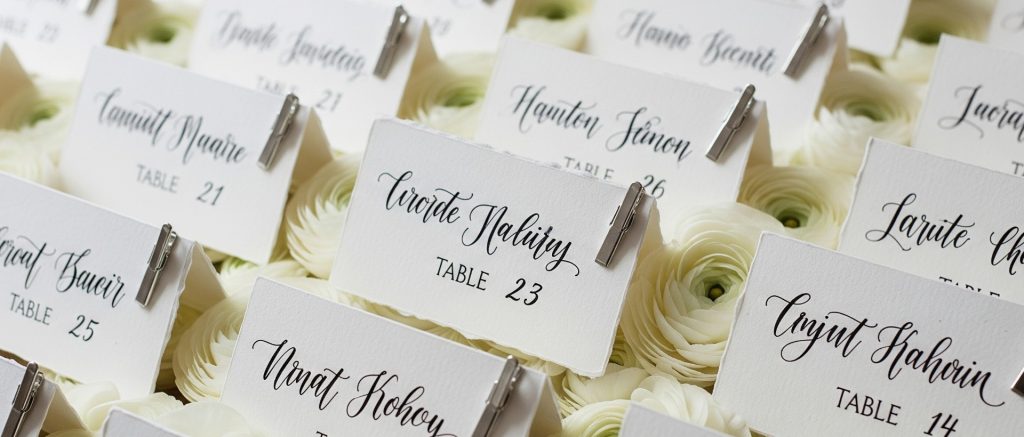
Some couples go for individual place cards. They’re a nice personal touch and they speed things along as well. Others don’t bother with paper and let guests look up their table with a QR code or on the wedding website.
Big banquet? Put someone at the entrance to point people to their tables. Elderly relatives especially, or anyone who’s never been to the venue.
Working with Your Wedding Planner on Seating Arrangements
First-timers don’t always see what a planner brings to a wedding seating plan in Singapore. Quite a lot, actually. They’ve done these venues before. They know which protocol matters to which family. They’ve seen the same small problems blow up at other weddings. They’ll spot the family landmine way before you do, suggest table spots you’d never think of, and deal with the late changes so you don’t have to.
Give your planner the guest list early, along with the family relationships and anything touchy. Who’s not speaking to whom, that kind of thing. From that they’ll work out groupings, point out clashes, and make sure your chart fits the room.
On the day itself they look after the physical bits: table numbers, place cards, whatever gets moved at the last minute. They sort it out straight with the venue staff. It’s one less thing pulling the couple away from their own wedding.
Final Checklist for Your Wedding Seating Plan
Before the final wedding seating plan in Singapore goes to your venue, go through this list.
- All RSVPs confirmed and accounted for
- Table capacities match what the venue can actually offer
- VIP and family tables positioned where they should be
- Elderly guests seated somewhere accessible and comfortable
- Dietary restrictions clearly marked for the caterer
- Couples seated together, unless they’ve asked otherwise
- Each table grouped around some real common ground
- Floor plan matches the venue’s current layout. Not an old one.
- Display system clear enough for guests to read at a glance
- A backup plan ready for whatever changes at the last minute
Seating charts aren’t romantic. Nobody gets excited about them. But they set the tone for the whole evening, and a thoughtful one tells every guest they were considered. After that, the conversation at each table looks after itself.
A wedding seating plan in Singapore is just one of the many moving parts we take off a couple’s plate at 8 Asthas. As part of our full wedding planning and coordination services, we work through the seating chart alongside the venue, the vendors, the cultural protocol and everything else that needs to come together. That way, family tradition and guest comfort never end up fighting each other on the day. Planning a wedding in Singapore? Want a team that’s done it before to handle the details, right through to the last table? Get in touch with 8 Asthas. We’ll help your reception run smoothly, start to finish.

